Essential Prenatal Yoga Poses for Each Trimester

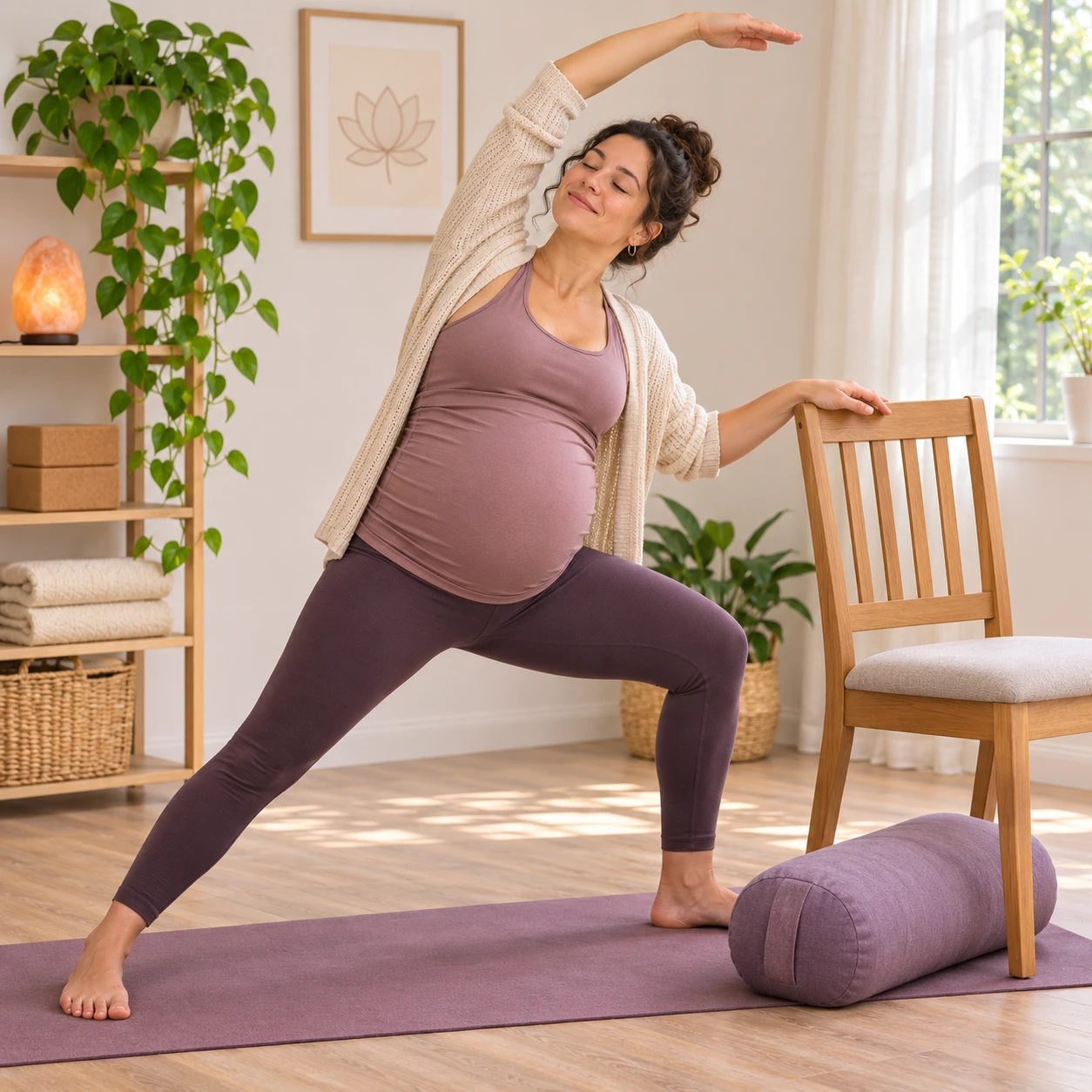
Prenatal yoga can offer a gentle way to move, pause, and notice how your body feels as pregnancy progresses. The most useful poses are often simple: a comfortable cat-cow, a supported standing stretch, or a resting position with pillows. Your energy, symptoms, and comfort can change from day to day, so treat these options as a flexible menu rather than a fixed routine.
Start with safety and comfort
Prenatal yoga should feel adaptable and comfortable, with movement adjusted to your health, experience, and pregnancy. Ask your healthcare professional whether yoga is appropriate for you, especially if you have complications, activity restrictions, or questions about a particular pose.
Pregnancy affects people differently, and a pose that feels fine one week may feel awkward the next. Keep the effort gentle enough that you can breathe normally and speak in short sentences. Avoid forcing a stretch, holding your breath, or trying to match someone else’s range of motion. If you are new to yoga, a qualified prenatal yoga instructor can offer pregnancy-aware modifications and help you use props.
Stop practicing and contact your healthcare professional for advice if you experience warning signs such as vaginal bleeding, fluid leakage, painful contractions, dizziness, chest pain, unusual shortness of breath, or significant pain. Follow any individualized guidance you have been given. General yoga advice cannot account for every pregnancy or medical history.
First-trimester poses for gentle movement
In the first trimester, choose low-effort poses that feel comfortable and let your energy and symptoms guide the practice. Cat-cow, a supported seated stretch, and side-lying rest are useful options to explore gently.
Cat-cow
Come onto hands and knees, placing your hands under your shoulders and knees under your hips. As you inhale, gently lengthen your spine and lift your chest a little; as you exhale, round your back only as far as feels easy. Move slowly for a few breaths, without pressing into your wrists or belly. Cat-cow can be a simple way to bring awareness to spinal movement, but skip it if kneeling is uncomfortable.
Supported seated stretch
Sit on a folded blanket or cushion with legs crossed or extended comfortably. Rest one hand on the floor or a block and reach the other arm overhead for a mild side stretch. Keep both sides of your seat grounded if possible, and avoid pulling yourself deeper.
Side-lying relaxation
Lie on your side with a pillow beneath your head and, if helpful, another between your knees. Let your shoulders soften and take easy, unforced breaths. First-trimester nausea and fatigue can make a shorter practice, or no practice at all, the right choice. Rest counts.
Second-trimester poses for stability and mobility
In the second trimester, make room for your changing shape and choose stable poses with support close by. A supported warrior pose, standing side stretch, and cat-cow can maintain gentle movement without requiring deep or demanding positions.
Supported warrior pose
Stand near a wall or sturdy chair, feet comfortably apart. Step one foot back, keeping the stance shorter than you might use outside pregnancy, and bend the front knee only a little. Hold the chair or wall for balance, keep your torso upright, and stop if you feel pulling, pressure, or strain. You can shorten the stance further or replace the pose with a gentle standing stretch.
Standing side stretch
Place your feet about hip-width apart and keep one hand on a wall or chair. Reach the other arm up and lean slightly to the supported side, keeping the movement small. Repeat on the other side only if it feels comfortable. A wide, grounded stance is often easier to manage as balance and posture shift.
Cat-cow may still feel good, but use a folded blanket under your knees and keep the movement modest. As your abdomen grows, avoid compressing it against the thighs. If getting down to the floor or standing back up feels cumbersome, practice with a prenatal instructor or choose a chair-based alternative.
Third-trimester poses for comfort and relaxation
In the third trimester, prioritize supported positions, gentle mobility, and rest over intensity. Side-lying relaxation, chair-based movement, and a comfortable wide-knee child’s pose modification may suit some people, but none is essential.
Side-lying relaxation
Settle on your side with pillows supporting your head, upper leg, and belly as needed. Adjust the pillows until your hips and lower back feel at ease. Stay for several unhurried breaths, or get up if the position becomes uncomfortable. Ask your healthcare professional about rest positions if you have been given specific guidance.
Child’s pose modifications
For a modified child’s pose, kneel on a padded surface with knees comfortably wide and toes turned in or relaxed. Place a bolster or stacked pillows in front of you, then rest your chest and arms on the support rather than folding tightly toward the floor. If kneeling, pressure, or the position of your abdomen feels uncomfortable, skip it. A chair-supported forward rest or side-lying position may feel better.
You can also sit in a chair and make small shoulder rolls or gentle ankle circles. Keep movements slow and within a comfortable range. At this stage, ease of getting into and out of a pose matters as much as the pose itself.
Modify poses as your pregnancy progresses
Modify prenatal yoga by increasing support, widening your stance, reducing your range of motion, and choosing positions that remain easy to enter and leave. Props can make a pose more accessible, though they do not make every pose suitable for every pregnancy.
- Use a chair or wall for standing poses and balance support.
- Add folded blankets beneath knees or hips to reduce pressure on the floor.
- Place a bolster or pillows under your chest, between your knees, or behind your back for supported rest.
- Widen your stance when a narrow position presses on your abdomen or feels unsteady.
- Choose a seated or side-lying alternative when kneeling, lying on your back, or getting up feels uncomfortable.
A common mistake is treating trimester labels as strict rules. They can help you anticipate changes, but comfort and clinician advice matter more than a calendar. Another is pushing for a deeper stretch because the pose used to feel easy. Pregnancy changes joint and balance demands; reduce the range instead. When unsure, pause and ask a prenatal yoga instructor or healthcare professional rather than experimenting with a challenging variation.
Build a short, mindful prenatal yoga routine
A short prenatal yoga routine can combine easy breathing, a few comfortable movements, and supported rest. Keep it flexible: stop early, skip any pose, or rest throughout if that is what your body needs.
- Arrive: Sit comfortably or lie on your side. Notice how you feel without trying to change your breathing.
- Move gently: Try several slow rounds of cat-cow, or seated shoulder rolls if floor movement is inconvenient.
- Add one supported pose: Choose a supported warrior near a chair, a standing side stretch, or a modified child’s pose that feels comfortable for your trimester.
- Rest: Settle on your side with pillows and allow your breathing to return to its natural rhythm.
Keep breathing easy and continuous; there is no need for forceful breathwork, long holds, or breath retention. Mindfulness can be as simple as noticing where you feel steady and where you want more support. If a pose causes pain, pressure, dizziness, or breathlessness, come out of it and seek advice when appropriate.
Frequently asked questions
Is prenatal yoga safe in every trimester?
Many people can adapt gentle yoga during pregnancy, but no routine is safe for everyone. Check with your healthcare professional if you have a high-risk pregnancy, complications, activity restrictions, or new symptoms, and choose a qualified prenatal yoga instructor if you want hands-on guidance.
Which poses should I modify or avoid during pregnancy?
Modify or skip any pose that causes discomfort, abdominal pressure, pain, unsteadiness, or difficulty breathing. Deep twists, intense stretches, challenging balances, and positions that feel compressive may need adjustment or an alternative. Individual guidance takes precedence over general pose lists.
How can I use props for more support?
Use a chair or wall for standing balance, blankets under your knees, and pillows or a bolster to support your chest, belly, back, or legs. Arrange props before you begin so you do not need to reach or strain mid-pose.
When should I stop practicing and seek advice?
Stop if you feel pain, dizziness, unusual shortness of breath, chest pain, bleeding, fluid leakage, or painful contractions, and contact your healthcare professional for guidance. If you are uncertain whether a symptom is concerning, ask rather than continuing the practice.