How to Start a Prenatal Yoga Practice in Your First Trimester

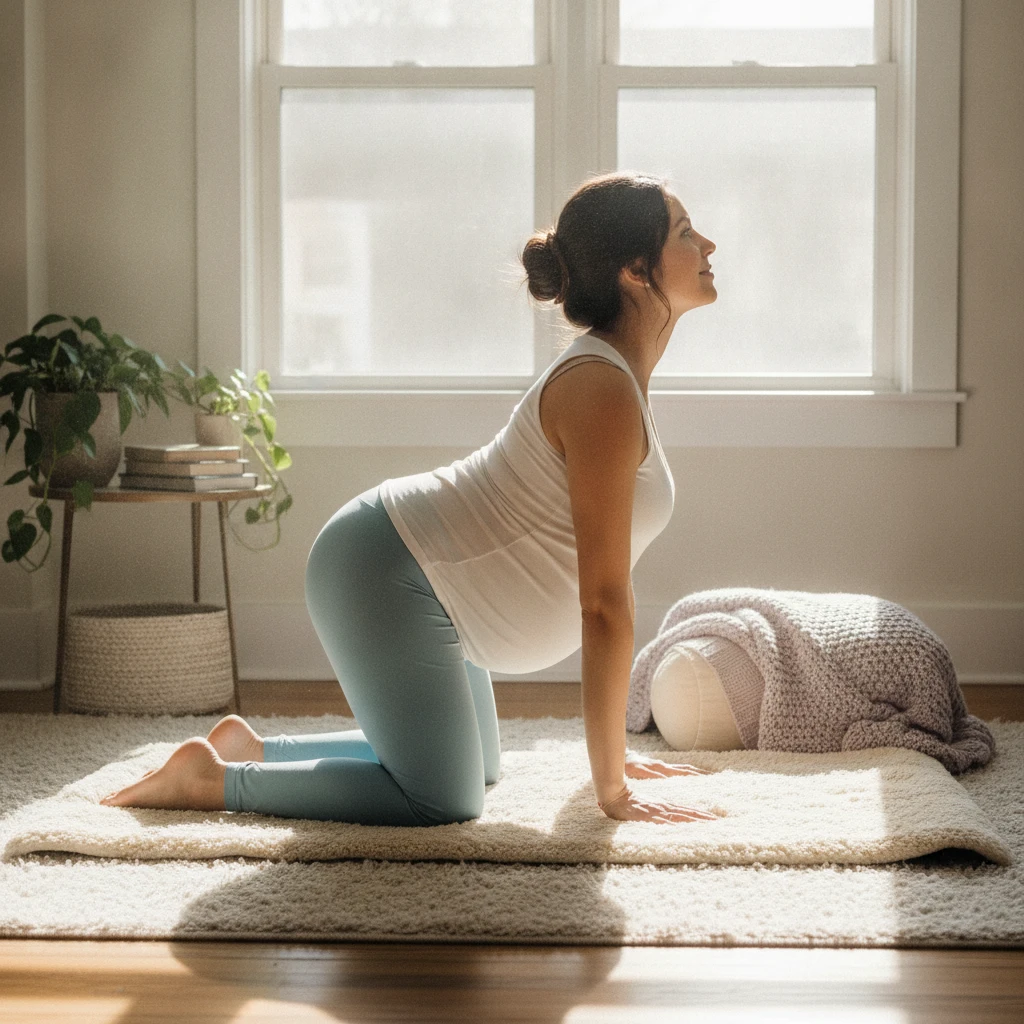
Starting prenatal yoga in your first trimester can be simple: begin gently, check in with your healthcare provider, and let your comfort guide each session. Early pregnancy may bring nausea, fatigue, breast tenderness, or days when you feel much like yourself. A flexible practice makes room for all of it.
Prenatal yoga combines gentle movement, breath awareness, and relaxation. It can support a sense of ease and body awareness, but it is not a way to prevent or treat pregnancy complications. Your health history and current symptoms matter more than any standard routine, so seek individualized advice before starting or changing an exercise practice.
Check in with your healthcare provider
Before starting prenatal yoga or changing your exercise routine, ask your healthcare provider what is appropriate for your pregnancy. Individual guidance matters because health history, symptoms, and pregnancy-related considerations vary.
Tell your provider what you plan to do, how often you hope to practice, and whether you have exercised or practiced yoga before. Ask if you need specific restrictions or modifications. This conversation is especially helpful if you have a medical condition, pregnancy complications, pain, or concerns about activity. Your provider can advise you based on your circumstances; a general article or class cannot offer personal medical clearance.
If you already practice yoga, early pregnancy may still be a reason to adjust the intensity. Explain your usual style, such as heated, vigorous, or restorative yoga, rather than asking only whether yoga is safe in general. The details help your provider give more useful advice.
Set realistic expectations for early pregnancy
In the first trimester, a good prenatal yoga practice changes with your symptoms and energy. Keep sessions short and gentle, and consider rest a valid choice on days when nausea or fatigue makes movement uncomfortable.
Pregnancy symptoms can vary from day to day. You might feel steady enough for a few stretches one morning and need to lie down the next. There is no single first-trimester experience or required amount of yoga. Start with a few minutes, then finish while you still feel comfortable rather than aiming to complete a demanding routine.
Use a simple check-in before you begin:
- Energy: If you feel depleted, choose rest or a brief, supported stretch.
- Comfort: Notice nausea, soreness, dizziness, or any new pain before moving.
- Intensity: Keep the effort easy enough that you can breathe comfortably and talk.
Gentle movement is not a test of discipline. Skipping a session does not mean you have failed; it means you are responding to what your body needs that day.
Choose a class or create a calm home setup
Choose a prenatal yoga class led by a pregnancy-informed instructor, or create a quiet home space where you can move at your own pace. The right option is the one that offers clear modifications and makes it easy to stop or rest.
A prenatal yoga instructor should be comfortable adapting poses for different experience levels and pregnancy symptoms. Before booking, ask whether the class is suitable for beginners, what the instructor recommends for first-trimester students, and whether you can rest whenever needed. A prenatal-focused class may offer relevant options, while a regular class can be less predictable if the teacher is unfamiliar with pregnancy modifications.
At home, choose a stable, uncluttered area with enough room to change positions. Use a reputable prenatal class or video that encourages you to follow your provider’s advice and skip anything uncomfortable. Avoid feeling pressured to match a teacher’s pace or range of movement. The convenience of home practice comes with a trade-off: you may need to make safety decisions without an instructor there to suggest an alternative.
A mat, a firm cushion, and a sturdy chair or wall can provide useful support. Keep water nearby, and practice in a comfortable, well-ventilated room. You do not need special clothing or expensive equipment to begin.
Build a gentle first-trimester routine
A gentle first-trimester routine can follow four steps: warm up, move comfortably, notice your breath, and finish with relaxation. Keep each part optional, and stop if a position or movement does not feel right.
Try this short structure as a starting point, not a prescription. Ask your healthcare provider or prenatal yoga instructor about any movements you are unsure of.
- Arrive and warm up: Sit on a cushion or chair and notice how you feel. Roll your shoulders slowly or move your hands and ankles, keeping the motion easy.
- Add comfortable movement: If it feels good, try a gentle seated side stretch or a small, slow pelvic tilt while seated or on hands and knees. Keep the range of motion modest and skip anything that causes strain.
- Practice breath awareness: Breathe naturally and notice the air moving in and out. There is no need to force a deep breath, hold your breath, or follow a complicated breathing pattern.
- Rest: Lie on your side or sit supported for a few quiet minutes. Let your jaw and shoulders soften, and end the practice whenever you want.
For your first sessions, even five or ten minutes may be enough to learn what feels comfortable. There is no need to meet a weekly target unless your healthcare provider has given you specific guidance. Increase time only if the practice continues to feel manageable.
Use modifications, props, and comfort cues
Modifications and yoga props make prenatal yoga more adaptable: use support to reduce strain, shorten a stretch, or change position whenever comfort calls for it. A pose is optional, and you do not need to push through discomfort to benefit from gentle movement.
A folded blanket or cushion can raise your hips while sitting. A chair or wall can help with balance, and blocks can bring the floor closer in a supported pose. Choose stable props that will not slide. If a position feels awkward, try a smaller range, add support, or skip it entirely.
Use comfort as your guide. Stop or adjust if you feel pressure, pain, dizziness, or breathlessness, and do not compare your range of movement with what you could do before pregnancy. The aim is a calm, supported experience, not a deeper stretch.
Some common early-practice missteps are easy to avoid:
- Trying to keep up with a familiar intense routine: Familiarity does not guarantee the same practice feels comfortable now. Scale back and follow individualized guidance.
- Forcing a pose because it appears in a video: Online instruction cannot see how you feel. Choose another option or rest.
- Treating props as a sign of weakness: Support is a practical modification that can make a position more comfortable and stable.
Know when to stop and seek guidance
Stop your practice if you feel unwell or notice a concerning symptom, and contact your healthcare provider for advice. If you are unsure whether a symptom is urgent, use local medical services rather than trying to assess it through yoga guidance.
Do not try to breathe through pain, dizziness, unusual shortness of breath, or any symptom that alarms you. Pause, move to a comfortable resting position, and seek medical advice. Follow any activity limits your provider has given you, even if a class or video suggests a pose is generally suitable.
Your provider can tell you whether to resume and what changes may be appropriate. Until you receive guidance, skip the practice. Prenatal yoga should leave room for rest and reassessment; it should never require ignoring a warning sign.
Frequently asked questions
Can I start prenatal yoga if I’m new to yoga?
Yes, many beginners can explore gentle prenatal yoga, but first ask your healthcare provider whether it suits your individual situation. Choose a beginner-friendly class or video that offers modifications, and start with short sessions rather than trying to learn several challenging poses at once.
How often should I practice in the first trimester?
There is no one schedule that fits everyone. Your provider can offer guidance based on your health and activity history. If you have the go-ahead, begin with brief sessions when you feel well and adjust the frequency to your symptoms and energy.
Are regular yoga classes suitable during pregnancy?
Some may be, but a general class might not address pregnancy-specific comfort needs. Tell the instructor you are pregnant, ask about their experience with modifications, and avoid heated or vigorous practice unless your healthcare provider has specifically advised you otherwise. A prenatal-focused class may make it easier to find appropriate options.
What should I do if nausea or fatigue interrupts practice?
Stop, rest, and try again another day if you feel better. You can also shorten the session to a few quiet breaths or skip movement altogether. If symptoms concern you or affect your ability to stay comfortable, ask your healthcare provider for advice.